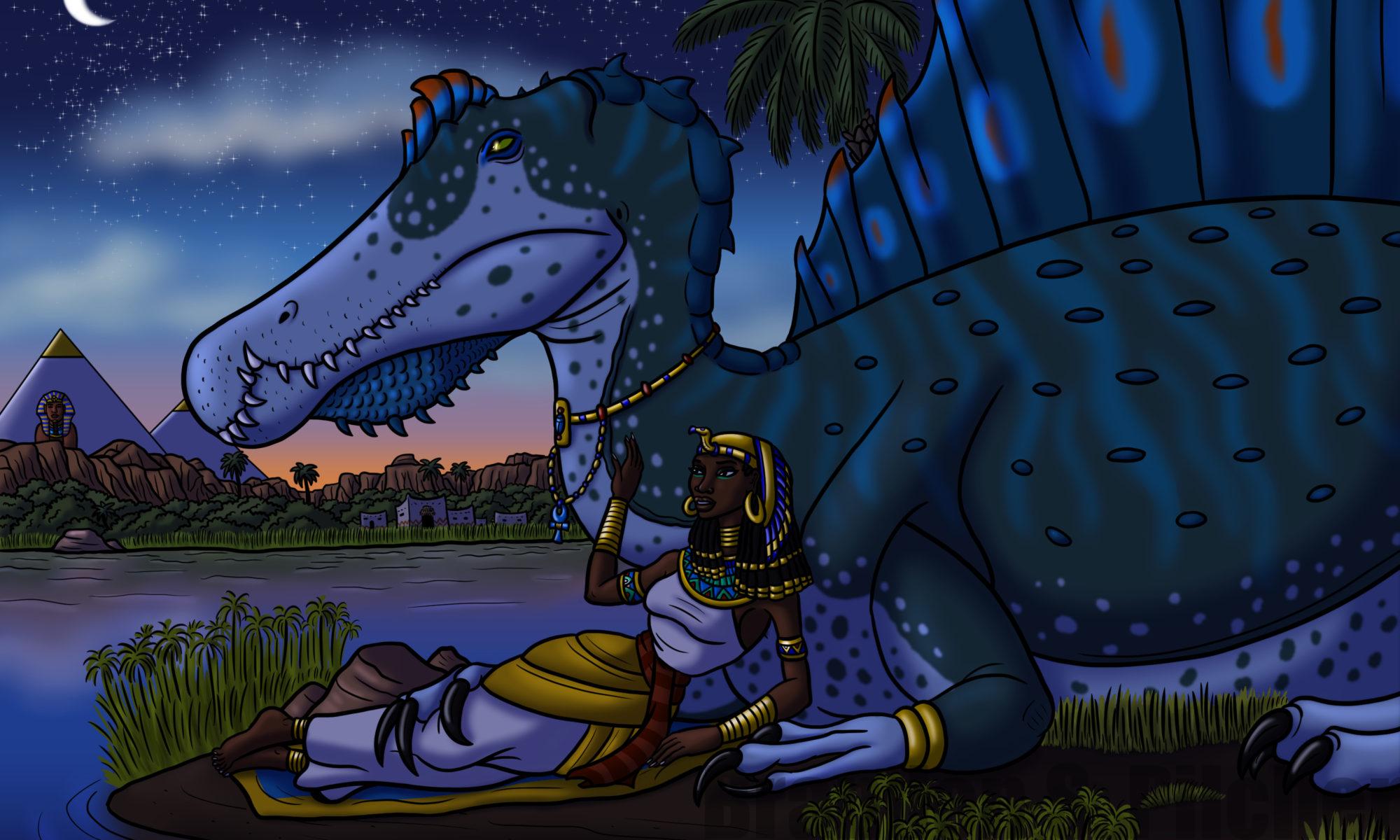
More Precious Than Gold

Makena of Azania aiming her arrow in the deserts of Ahrabiyya.

An acrid haze floated over the camp. Makena passed through it with her stomach knotting with nausea. Dark torrents of smoke billowing from the burning tents watered her eyes. Spatters of bloodshed, reeking to the heavens of a coppery odor, stained the sand red.

There lay all over the ruined camp the bodies of men and women, young and old, their once tawny skin having faded into an ashen pallor. Even infants lay in their mothers’ arms with faces still contorted in voiceless, unmoving cries. Javelins transfixing many of the dead testified to an atrocity at the hands of men. Plucking out one of the javelins, Makena recognized its leaf-bladed tip as being of Habeshan make.

She curled her lips into a snarl even as remorse pierced her heart. The Habesha were not her people, but as another people of eastern Afrika, they shared the same black skin and coiled hair as her own Azanians despite their narrower noses and thinner lips. By attacking these hapless Ahrab nomads with such brutality, the Habesha had made Makena regret her own distant kinship with them.

A wide road of human tracks, mixed with those of camels and sheep, led out of the camp southward through the desert. Upon reading the centermost line of tracks the way a scholar could read a scroll, Makena discerned that the walkers had laid it with a slow, shuffling gait. Some of the tracks’ dimensions matched the feet of women and children as well as men. Such were the telltale signs of captives of all ages and genders being herded in a line like cattle for slaughter. If Makena’s suspicions were correct, their fate would be no better.

She unslung her bow with a determined grip. Makena had traveled to the sandy Ahrabiyyan peninsula in search of an ancient treasure, the treasure of old Ubar, and she had hoped the people in this camp would guide her to that fabled ruin. Much as fate had banished all hope of that, so had it banished any thought of treasure from her mind. Who were left of these people needed justice. They needed their freedom back. Only Makena could give them that out in these barren wastes.

Continue reading “More Precious Than Gold”

Mask of the Cliff-Dwellers

A valiant adventuress confronts a fin-backed pelycosaurian predator within sight of some ancient cliff dwellings.

Ezegbe of Amozey tugged the reins of her gallimimus. The shaggy-feathered creature halted with a squawk, with the dust kicked up by its long and slender legs settling over the desert floor behind it. After slipping off its saddle, the Amozean warrior gave her mount’s elongated neck a gentle rub while treating it to a handful of dried dates and beetles, which it pecked up with relish. Once Ezegbe had tethered the gallimimus to a tamarisk sapling, she brushed sand off her green cotton top and skirt and her bun of fluffy black hair. She then surveyed the landscape to her left with a hand over her umber-skinned brow to shade her eyes from the midday sunlight.

The canyon below her cut westward through the desert like a colossal scar. Its sandstone walls burned as brilliant as burnished copper beneath the sun’s unobstructed glow, sinking as far into the earth as many mountains stood high. A narrow forest of palm and acacia trees choked the gorge’s very bottom, their leafy crowns blocking any view of whatever rivulet supplied them with water. On the numerous ledges that jutted from the cliffs’ faces, the weathered edifices of an extinct people stood crammed together as slouching beige stacks of boxy and cylindrical structures.

Ezegbe could not find any steps carved into the canyon walls that would allow passage between these old cliffside settlements. Surely these people, whoever they were, had set up wooden bridges and ladders connecting village to village which had since disintegrated into dust over the eons. Squinting at the face of a cliff beneath one cluster of ruins, the Amozean did notice pairs of little pits gouged into the rock that ran down its height to the ravine floor, which could have served as climbing holds for the ancient denizens while they went to fetch water beneath the trees. It was still hard for her to imagine any human being having the strength or stamina to make regular climbing trips up and down the canyon walls.

Assuming, of course, the beings who built these cliff dwellings were human to begin with. Priests, shamans, and philosophers all over the world spoke of races of other creatures that had evolved sapience and erected shining cities millions of years before humanity’s descent from the trees. All over the world, these earlier civilizations’ ruins lay like innumerable rotting skeletons on a past battlefield. There were even legends of old cities deep within the vast sea, their monuments long since encrusted by coral and seaweed. Even if humans were the race who had built this canyon’s villages, humankind itself had been around for a few hundred millennia, plenty of time for entire nations to rise and fall as nations always had.

Regardless of the cliff dwellings’ origin, what Ezegbe had to do was find a way into one of them. Akhenhotep, the Hekuptan priest who had hired her, claimed that the canyon hid a mask-like idol that might have retained enough magical energy for him to exploit. What he planned to do with it, he had withheld, and Ezegbe could not promise that she could even find such an artifact lying there unmolested over uncounted centuries. Still, the middle-aged Hekuptan had plenty of gold cowries to spare, and he had even paid half the price upfront.

An agitated shriek from her steed shattered Ezegbe’s musing. The gallimimus was hopping on its feet while waving its plumed forelimbs in a panic while a hungry dimetrodon charged at it. The dimetrodon may not have been nearly as large as the giganotosaurus of the southern savanna or the tyrannosaurus from the Amozean jungles even further south, but these lizard-like monsters were nonetheless the desert’s apex predators and were still big enough to prey on humans or gallimimuses. The tall semicircular fin that reared on the dimetrodon’s back did not hinder its darting speed in the least.

Continue reading “Mask of the Cliff-Dwellers”