
A joke goes that the reason the pyramids are in Egypt is because they were too heavy to carry off to the British Museum. It attests to our recent anxiety about how museums as an institution have often functioned as glorified treasuries of colonial loot, confiscating cultural artifacts from all over the world for visitors in the Global North to ogle without those artifacts’ cultures of origin receiving any dues whatsoever. The Benin Bronzes from Nigeria and the Elgin Marbles from Greece are perhaps the most famous targets of such plundering.
Thankfully, most debates over museums’ legacies have concerned manmade objects such as Egyptian sarcophagi or Pacific Northwestern totem poles. Remaining more or less unscathed are these establishments’ main attractions, namely the dinosaur bones. There is good reason for this. Unlike ritual masks or mummies which have their roots in specific human cultures, prehistoric life is public domain.
Private persons have bought and sold individual fossil specimens to be sure, and this causes paleontologists who wish to study these remains no end of consternation — as it should. However, no human culture can lay claim to extinct animals any more than they can living ones like elephants or bison. If you dress up as a dinosaur for Halloween, nobody in their right mind would consider it cultural appropriation, unlike wearing a Native American warbonnet or a Sikh turban.
Nonetheless, as much as the dinosaur hall will be the highlight of most museumgoers’ experiences, as it certainly is mine, I want to play devil’s advocate and suggest that there is a potential problem with how we display animal fossils. What I mean is, it might be too macabre.
Do not misunderstand me, museums need to display fossils in one way or another. They are the hard evidence that visitors need to see of these creatures’ existence, and witnessing what was once part of a living animal that lived millions of years ago in person can provide one with an almost spiritual connection to the past. The issue is more the tradition of assembling these bones into entire skeletons articulated into lifelike poses.
Such skeletal mounts excel at conveying the sheer scale of these animals, and the most memorable can demonstrate the dynamism of which they were capable.

Their weakness is that, since they show only the bones of these animals, their ability to represent them as living animals is limited. And the truth is that most people are not interested in dinosaurs as simple collections of old bones turned to stone. Rather, they want to see them as creatures of flesh and blood that breathed, roared, and stomped through the jungles and savannas that have since become the land we walk on today. Moreover, if you think about it, there is something ghastly about the fact that most people experience dinosaurs in museums as mere skeletons.
To give you an idea of what I mean, imagine that archaeologists (who are to human cultures what paleontologists are to extinct animals) were to uncover a bunch of human skeletons, and that a museum exhibit were to have them posed doing their day-to-day routines in life. One skeleton is stalking antelope (also skeletal) with her friends, another is pounding grain in a mortar with a pestle, a third is tending the campfire, and the kids are chasing each other in a primitive version of tag. I would expect that most visitors would find the sight of so many human skeletons being posed like living people unsettling and would rather see the subjects depicted in sculptural or animatronic form, yet this is how museums have presented dinosaur skeletons since the beginning.

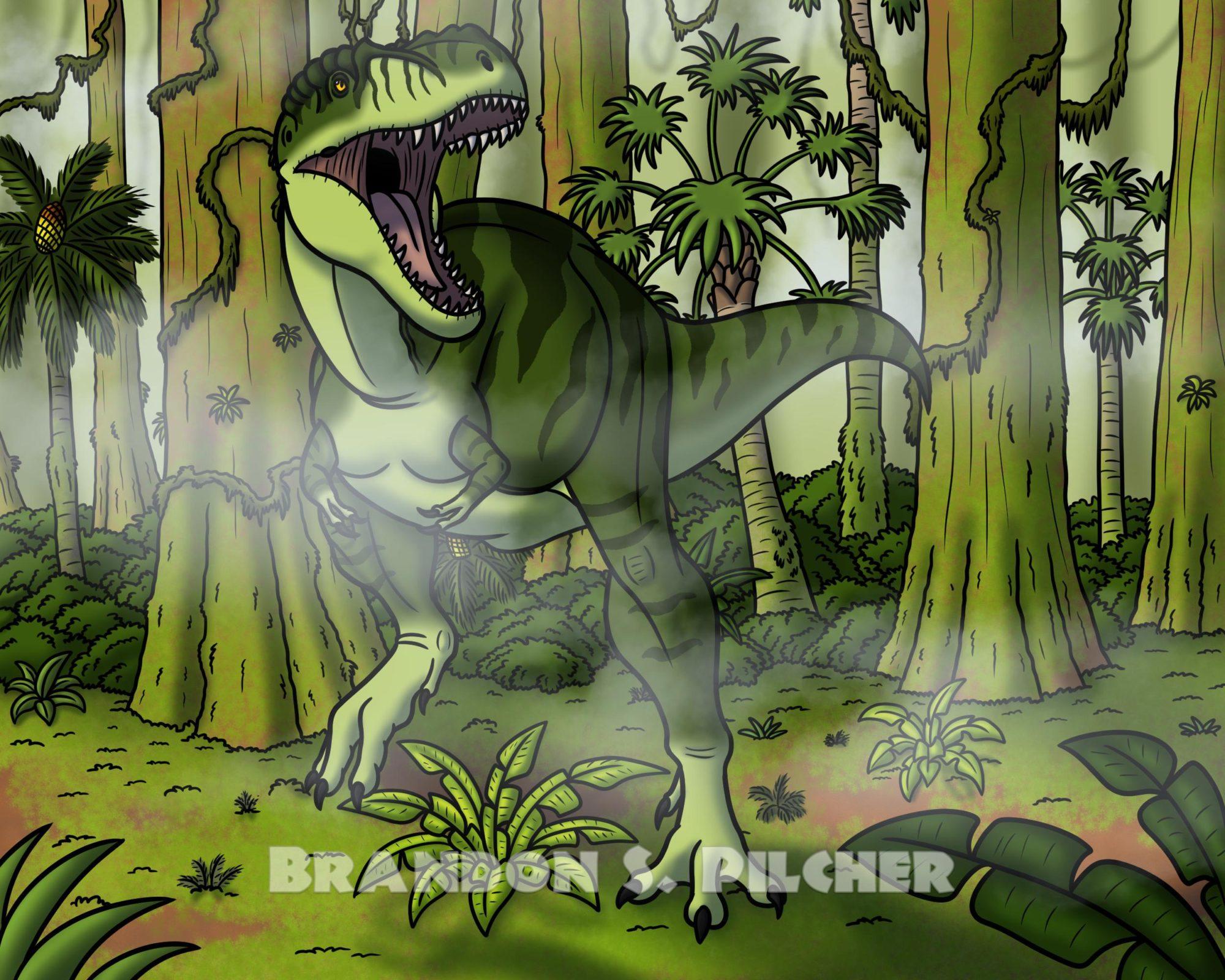
Perhaps it would be better if museums represented their dinosaurs not as skeletons in lifelike poses, but rather as life-sized models or animatronics reconstructing their appearance in life, ideally in a setting resembling their natural habitat millions of years ago. The fossils would still be on display as corroborating evidence for these animals’ existence, and that could even include a few whole skeletons (like the “Black Beauty” T. rex specimen at the Royal Tyrrell Museum in Canada). But the main attractions would be the portrayals of dinosaurs as fully fleshed out beings rather than only bare bones.
I don’t expect museums around the world to tear down their skeletal mounts any time soon, and I will still enjoy seeing them in person whenever I can. I also admit that any reconstruction of Mesozoic dinosaurs, whether skeletal or sculptural, will require some guesswork given the fossil record’s fragmentary nature and our ever-evolving understanding of these creatures. Still, I think we can do better than reducing dinosaurs to their bones like museums have traditionally done. They have always been much more than that.